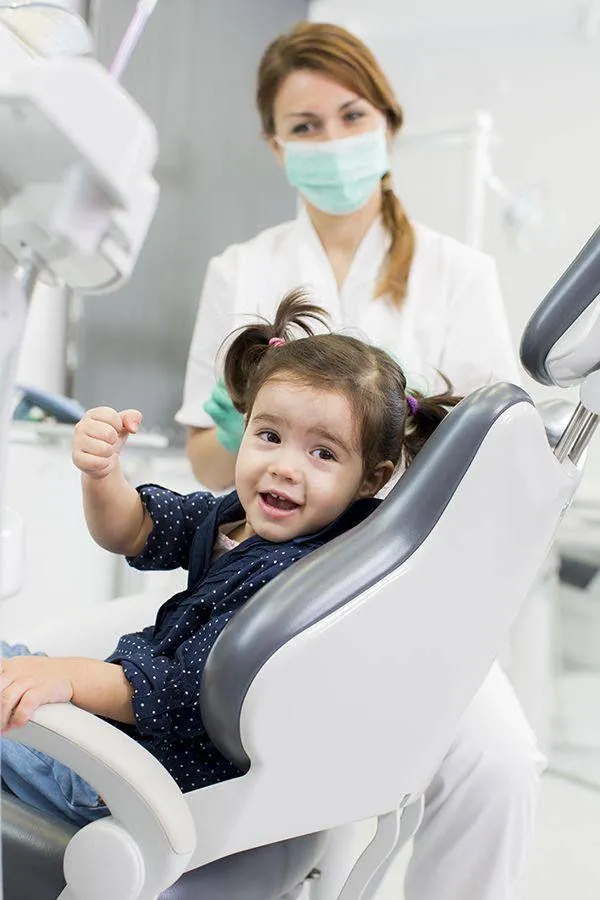
Root Canal Treatment for Children: Pulpotomy & Pulpectomy
Peace of mind for Langhorne families starts with us—24/7 emergency help for children’s tooth pain, a free 60‑minute consult with 3D CT (computed tomography), and soothing sedation options—so a pediatric root canal (kids’ root canal) feels calm, quick, and clear.
A Sunday Toothache in Langhorne: What Parents Need to Know
That 24/7 promise matters most on Sundays. Your 7‑year‑old falls asleep after a day at Sesame Place, then wakes at 8:30 p.m. clutching a cheek. The tooth is tender, and you notice a tiny “gum pimple” (a small bump that can signal infection) near a back baby molar. You’re calm on the outside, racing inside.
You check the calendar. Sunday night. Of course. You give a cold compress, double‑check your child’s dose of an age‑appropriate pain reliever per your pediatrician’s guidance, and text our emergency line. We reply within minutes, ask for a quick photo or short video, and set a first‑thing‑tomorrow slot—or sooner if swelling worsens. You’re not overreacting. You’re protecting that smile.
how do you tell if a baby tooth needs a root canal—and what happens next?
Why Saving Baby Teeth Matters for Langhorne Kids
You asked how to tell—and why it matters. The pulp is the tooth’s soft center (tiny nerves and blood vessels that keep the tooth alive). Baby teeth aren’t “just temporary.” They help kids chew, speak clearly, guide jaw growth, and hold space for adult teeth coming in later. When decay or injury irritates that pulp, pain and infection can follow. Save the tooth when we can, and we protect comfort, alignment, and everyday routines. That’s the goal.
Think about pizza night: a sore molar turns one bite into a wince. Reading practice can slip when a child can’t sleep through throbbing, and picky eating often worsens if chewing hurts. On X-rays (safe, low-dose pictures), we can see how deep a cavity goes. Then we match what we see to what you’ve noticed—night pain, swelling, or temperature sensitivity. If the nerve is only irritated, we may calm it. If it’s infected, we plan to clean it and seal the tooth so it keeps doing its job.
We know Neshaminy school mornings, travel soccer at Middletown, and community swim lessons don’t pause for tooth pain. Prompt care means faster relief, fewer missed classes, and a quicker return to practice. We offer before-school, after-school, and urgent slots, so your child’s week gets back on track without extra stress.
⚠️ When It Can’t Wait
If pain, swelling, or fever shows up after hours, text or call. Our emergency dentist in Langhorne PA
line is 24/7—we’ll triage by photo/video and arrange a same-day or first-thing visit.
When a Baby Tooth Needs More Than a Filling
These signs point beyond a simple cavity. If you notice two or more—especially at night—let’s check the tooth soon. A quick exam and low-dose X-ray show whether we calm the nerve or need deeper care.
Persistent or night-time toothache (throbbing or spontaneous)
Sensitivity to heat/cold that lingers after the stimulus
Darkened or grayish tooth color after a bump or fall
Swollen, red gums or a pimple-like bump (possible abscess)
Bad taste or drainage from the gum near the tooth
Pain when chewing or tapping the tooth
Untreated infection can spread from the tooth’s center into the bone and nearby face, causing more swelling and sharper pain. In baby molars, that inflammation sits close to the developing adult tooth bud; prolonged infection can affect enamel or eruption timing. Kids may lose sleep, skip meals, and struggle at school. In rare cases, facial swelling and fever can require urgent care or an emergency room visit. Acting early usually means simpler treatment, less medication, and a quicker return to normal. Our job is to stop the infection before it snowballs into bigger problems.
Waiting often turns a small cavity into a sleepless weekend. A molar that needed a quick pulpotomy (removing irritated tissue in the crown) can progress to a full-root infection needing a pulpectomy (cleaning crown and roots), or sometimes extraction. That means more time off work, extra school absences, and higher costs. We’d rather see your child for a 20-minute check today than see them swollen and miserable next week. If you’re unsure, send us a photo and a few notes; we’ll tell you if it can wait or if we should see you now.
Why Waiting Makes It Worse—and How We Make It Easier for Kids
Watch-and-wait usually backfires with nerve (pulp) problems. Numbing gels soothe the gums, not the inside of the tooth, so relief fades in minutes. Only antibiotics? They can calm swelling briefly, but they don’t reach the sealed inner space; once the medicine stops, the pain often returns stronger. The source is infected or inflamed tissue trapped in a tiny chamber. Definitive care—care that removes that tissue and seals the area—ends the cycle. That’s how we stop the 2 a.m. wake-ups, reduce the need for repeated medications, and keep kids eating and sleeping normally again.
Root-canal therapy for baby teeth is simply targeted cleanup. In a pulpotomy, we remove the irritated tissue in the top part of the tooth, place a soothing, germ-fighting material, and protect it—often with a small crown. In a pulpectomy, we clean the top and the roots when infection is more widespread, then gently fill those spaces so germs can’t return. Both options treat the cause, not just the symptoms, so biting stops hurting and sleep returns. This sets us up to explain which option fits your child, based on age, X-rays, and symptoms.
Comfort comes first. We use gentle numbing, kid-friendly explanations, and breaks on request. Nitrous oxide (laughing gas) helps many children relax; for very anxious or special-needs kids, our sedation dentistry in Langhorne PA add a deeper layer of calm. You can stay chairside, we pace the visit around your child, and most kids return to school the next day.
Pulpotomy vs. Pulpectomy: What Langhorne Parents Should Expect
Comfort is already covered—you can stay chairside, nitrous helps, and kids bounce back fast. So what treatment actually saves the tooth? We use two gentle options that are common in pediatric care and designed to keep baby teeth working until they fall out naturally. A pulpotomy treats the top of the tooth (the crown pulp—the irritated tissue under the chewing surface) when the roots look healthy. A pulpectomy goes deeper, cleaning the crown and the roots (the narrow channels inside the roots) when infection has spread further. Both are done with careful numbing, kid-friendly pacing, and most finish in one visit. Typical time in the chair: 20–45 minutes.
We choose based on symptoms, X-rays (low-dose images), and a quick nerve test. A pulpotomy removes only the crown pulp to stop pain while preserving healthy roots; a pulpectomy cleans crown and roots to remove infection and seal them. Either way, comfort stays front and center: gentle anesthesia, nitrous if needed, and breaks. We use rubber dam isolation (a tiny tooth raincoat), digital X-rays, and apex locators (tools that measure root length) for precision. Most kids leave comfortable and eat soft foods that day. We schedule a check in 6–8 weeks and monitor until the tooth is ready to shed. Next, we’ll cover crowns, recovery, and what to do at home.
OptionBest ForWhat HappensTime in ChairTypical RestorationMain GoalPulpotomyPain from decay or trauma limited to the crownNumb tooth; remove crown pulp; place medicine; seal~20–30 minutes, often one visitStainless steel or tooth-colored crownRelieve pain and keep roots healthyPulpectomyInfection extends into the rootsNumb tooth; clean canals; disinfect; fill~30–45 minutes, often one visitStainless steel or tooth-colored crownRemove infection and preserve tooth until natural sheddingExtraction fallbackTooth too damaged or infected to saveNumb tooth; remove; plan spacer if needed~10–20 minutesSpace maintainer if indicatedProtect space for adult tooth and overall health
Step 1: Gentle numbing and comfort check
Step 2: Tooth isolation to keep things clean and dry
Step 3: Careful removal of infected tissue
Step 4: Disinfection and protective medicine or filling
Step 5: Crown placement to strengthen the tooth
After the Root Canal: Crowns, Comfort, and Fast Healing
You just finished Step 5—crown placement to strengthen the tooth—so what happens tonight? Mild soreness for 24–48 hours is normal. Numbness can linger 1–2 hours; until it fades, have your child chew on the opposite side to avoid cheek or lip bites. For comfort, use an age-appropriate dose of children’s acetaminophen or ibuprofen as directed by your pediatrician or our instructions. Start with soft foods today: yogurt, oatmeal, scrambled eggs, pasta, smoothies. Keep the area clean. Gentle brushing and flossing around the crown are safe the same night. Call if swelling starts, fever appears, or pain isn’t controlled with over-the-counter (OTC) medicine.
You did the hard part. Most kids return to school the next day and resume sports in 24–48 hours. Light tenderness when chewing can last a few days; a new crown may feel “tall” at first and then settles as the bite adapts. We typically recheck in 6–8 weeks. Watch for red flags: increasing pain after day two, a new gum pimple, bad taste or drainage, facial/jaw swelling, fever over 100.4°F, or a loose crown. If antibiotics were prescribed, finish the course unless we advise otherwise. We’re on call 24/7—send a photo and we’ll guide next steps.
Think of the crown as a helmet for the tooth. Stainless steel crowns on back molars are ultra-durable, smooth, and designed to last until the baby tooth naturally falls out. For front teeth, we can use tooth-colored options (zirconia) for a natural look. Both protect against cracks, hold fillings securely, and stand up to everyday kid life.
Keeping this tooth healthy now is half the win; keeping the mouth healthy long-term is the other half. Book routine checkups and cleanings through our general dentistry in Langhorne PA page. We’ll track the crown, add fluoride or sealants when needed, and catch small issues before they become big ones.
Precision, 3D Imaging, and a Kid-Friendly Experience
Catching small issues before they grow is easier when we can see clearly and work calmly—and that’s exactly what our tech makes possible. We use low-dose digital X-rays (sharp images with minimal radiation) for routine views, and selective CBCT (cone-beam computed tomography, a 3D scan) only for complex cases. A rubber dam—the tiny “tooth raincoat”—keeps the area dry so medicines seal better and treatment moves quicker. Intraoral cameras let you see what we see in real time. We also pace the visit around your child: short steps, clear cues, breaks as needed. Result: fewer surprises, faster visits, and a tooth sealed right the first time.
Behind the scenes, our workflow keeps everything humming. A quick pre-procedure pause confirms the tooth, plan, and your child’s comfort; then we isolate, anesthetize, and verify numbness before we start. Apex locators (devices that measure root length precisely) guide our files so we don’t over- or under-clean. We document steps with photos and notes you can review before you leave. Sterilization and surface protocols run on checklists each visit, and we double-check home instructions before you walk out. You’ll get the plan in writing, plus a direct number to text if something pops up overnight. Simple. Safe. Consistent.
That commitment to precision runs through our adult care as well—our robotic implant system
guides implants with millimeter accuracy. Implants are for older patients, of course, but that practice-wide expertise lifts the standard for every child’s visit.
Case Story: From Abscess to Back-to-School in Langhorne
So what does that practice-wide expertise look like for a child in pain? Last Sunday at 8:45 p.m., a 7-year-old in Langhorne woke with cheek swelling and a small gum “pimple.” His parent texted us a photo. We replied within minutes, reviewed symptoms, and set a 7:30 a.m. slot. At the visit, we confirmed an abscessed baby molar and completed a gentle pulpectomy (cleaning the roots) with a stainless steel crown to protect the tooth. Cartoons on, parent chairside. Soreness faded over 24–48 hours with kids’ pain reliever. He ate soft foods that night and slept. By Wednesday, he was back at Neshaminy—smiling and pain-free.
Clinically, his temperature was normal and swelling was localized. Low-dose digital X-rays showed deep decay into the pulp with a small “shadow” (a sign of infection) near the roots. We numbed gently, isolated with a rubber dam (tiny tooth raincoat), and used an apex locator (device that measures root length) to clean precisely. We filled the canals with a resorbable paste (it dissolves safely as baby roots naturally thin) and placed a stainless steel crown. No antibiotics were needed because the source was cleaned and draining; we reserve them for fever or facial swelling. Total chair time: about 35 minutes. At 6 weeks, gums were healthy and the tooth symptom-free.
“You answered on a Sunday and talked us through every step. He barely flinched with the ‘laughing gas,’ and we were home before lunch. He slept that night, ate pancakes the next morning, and was back at school by midweek. We felt heard.”
Your First Visit: What We’ll Do and What to Bring
Feeling heard starts the moment you arrive: quick welcome, forms, and an insurance check while we listen to your child’s story. We take low-dose X-rays (minimal radiation) if needed, do a gentle exam, make a clear diagnosis, then explain options in a free 60-minute consult. If it’s safe and you’re ready, we offer same-day care—and you’re welcome to stay chairside.
Bring these to make the visit smooth and help us estimate coverage before any treatment.
Insurance card: current dental coverage details for on-the-spot estimates
Medication list: allergies, doses, and prescriptions
Comfort items: small toy, blanket, or music for your child
School/sports schedule: helps plan healing and return-to-activity
Questions: jot down top concerns you want answered
Costs, Insurance, and Our Free 60-Minute Consultation
You probably circled one big question on that list: cost. Most dental plans cover pulpotomy or pulpectomy (cleaning the nerve in a baby tooth) and a medically necessary crown, but benefits and deductibles vary by plan. To remove guesswork, we verify benefits before care and give a written estimate. For example, many PPOs (preferred provider organizations) cover 50–80% after the deductible, while HMOs (health maintenance organizations) use fixed copays. If a pre-authorization will help, we submit it. Need flexibility? We offer payment plans, and HSA/FSA (health savings/flexible spending accounts) dollars usually apply to any out‑of‑pocket portion. You’ll know your numbers before we numb.
Clarity matters more than fine print, so we walk you through options side by side. We show your estimated out‑of‑pocket for “pulpotomy + stainless steel crown” versus “extraction + space maintainer,” and explain the tradeoffs in time, comfort, and long‑term alignment. No pressure, no surprise add‑ons. If costs change after we hear back from insurance, we call you first and update the plan in writing. You leave knowing what we’ll do, what it costs, and how it’s paid. Next, a few local planning tips to make your visit easier.
💡Good to Know
Book your free 60‑minute consult—exam, coverage check, and 3D CT (only when it truly adds value). Explore our dental services, and enjoy a $90 restaurant voucher as a new patient.
Langhorne Logistics: Timing, Parking, and Nearby Landmarks
You booked the free 60-minute consult—now let’s make arrival simple. For Neshaminy students, we offer before‑school starts (as early as 7:30 a.m.), after‑school spots (3:00–6:00 p.m.), and quick lunch‑hour checks when timing is tight. Commuting from U.S. Route 1 or Interstate 295 (I‑295)? Early mornings and after 5:00 p.m. work well, and we keep wait times short. We’re minutes from Oxford Valley Mall, near Langhorne Manor, and an easy hop from Core Creek Park, so errands and playtime can fit the same trip. Parking is easy—free, close to the door, and stroller‑friendly. Need to bring siblings? We have TVs and kid‑friendly distractions. Example: drop off at school, swing by for a 30‑minute evaluation, and be back before pickup. If you’re juggling practice, text us—we’ll find a slot that keeps your evening calm.
To cut stress on busy roads, aim for mid‑morning (9:00–11:00 a.m.) or early afternoon (1:30–3:00 p.m.) when traffic around Oxford Valley Mall is lighter. In summer, Sesame Place crowds can slow U.S. Route 1—add 10 extra minutes, especially on Fridays. From I‑295, both PA‑213 (Maple Avenue) and Woodbourne Road are reliable; we’ll text turn‑by‑turn if you’d like. Plan to arrive 10 minutes early for parking and a bathroom break, and send us a quick text if you’re running behind—we hold your spot whenever we can. Need a prescription filled after your visit? We can route it to a nearby pharmacy at the mall area or along Maple Avenue so you’re not crisscrossing town. Weather hiccups or school delays? We’ll reshuffle fast. Next up, if a baby tooth can’t be saved, we’ll show you the comfortable, step‑by‑step plan.
If a Baby Tooth Can’t Be Saved
As promised, when saving a tooth isn’t safest, we switch to a gentle, quick extraction. It’s the healthiest choice with extensive decay under the gum, a severe fracture, spreading infection, or failed prior therapy that won’t predictably heal. We fully numb the area, remove the tooth in minutes, and place gauze. Most kids are back to school the next day. Comfort first. Clear instructions. No surprises.
Want details on what that visit looks like? Explore our oral surgery in Langhorne PA care to see how we handle simple baby-tooth extractions, surgical removals, and aftercare—step by step.
If your child is anxious—or has special needs—we can add nitrous or deeper options. Learn about our sedation dentistry in Langhorne PA approach and when it’s appropriate for extractions.
After removal, we often place a space maintainer (a small hold-the-spot device) so adult teeth have room to erupt. We’ll monitor alignment at checkups and, if crowding risk is high, suggest an early review with orthodontics in Langhorne PA to keep growth on track.
Permanent Tooth Injuries in Older Kids and Teens
We just talked about holding space and guiding growth. For older kids and teens, injuries often involve permanent teeth, so the plan shifts to long-term preservation. First choice: save the natural tooth. We stabilize chips and cracks, bond broken pieces, and do root canal therapy (cleaning and sealing the inner nerve) when the pulp is involved. If a tooth can’t be predictably saved, we map a “now vs. later” path: a temporary replacement today, and a lasting solution after growth finishes. Implants wait until growth plates close—often late teens for girls and early twenties for boys. In the meantime, options like a flipper (a removable temporary tooth), a resin-bonded bridge (Maryland bridge), or orthodontic space management keep smiles natural.
So what should you do in the moment? If a tooth is knocked out, keep it moist in milk or saliva, don’t scrub the root, and call us—replanting within 30 minutes gives the best chance. For cracks or chips, we control pain, take digital X-rays, and use CBCT (cone-beam computed tomography, a 3D scan) only if it changes care. We may splint a loose tooth for 1–2 weeks, and start root canal therapy for permanent teeth when needed to protect the root. Follow-ups happen at 2 weeks, 6–8 weeks, 6 months, and 1 year. Then we focus on prevention: custom sports mouthguards to stop repeat injuries. Still have questions? Our FAQs are up next.
When growth is complete, explore how dental implants can replace missing teeth with natural-looking, long-lasting results.
Planning close to home? See our dental implants in Langhorne PA guide for candidacy, timelines, and costs.
Want to see our precision in action? Our robot-guided dental implants program showcases millimeter-level accuracy—the same attention to detail we bring to every teen trauma case.
Parents’ FAQs in Langhorne
After seeing how our precision guides care, you may still have questions. Text or call 24/7 for advice—we’ll look at photos and guide next steps.
We fully numb the tooth, and most kids feel pressure, not pain. Some soreness 24–48 hours is normal; children’s acetaminophen/ibuprofen helps. Nitrous (laughing gas) keeps visits calm.
Most pulpotomies take 20–30 minutes; pulpectomies run about 30–45 minutes. Many finish in one visit, and kids usually return to school the next day.
Usually yes—crowns protect the treated tooth from cracking and redecay. We use stainless steel on back molars and white zirconia on front teeth for a natural look.
Yes. We follow AAPD (American Academy of Pediatric Dentistry) guidelines, use low‑dose imaging, confirm dosing, and monitor. You can stay chairside; nitrous or sedation with monitoring is available.
Yes—treated baby teeth usually exfoliate (fall out) on schedule. Front baby teeth shed around ages 6–8; baby molars often 10–12. We monitor eruption at checkups.
If saving isn’t predictable, we’ll remove the tooth gently and place a spacer if needed. Learn about our oral surgery in Langhorne, PA approach and recovery.
Prevent repeats with fluoride, sealants, and routine checkups. Start with our general dentistry
visits—cleanings, diet coaching, and cavity‑risk checks every six months.
Langhorne Parents: Let’s Help Your Child Smile Again
Preventing repeats with fluoride and checkups is the plan—and when pain flares now, we move fast to fix it. We can help today. We offer 24/7 guidance, same-day or first-thing appointments, and gentle, kid-friendly care that gets most children back to school the next day. Your free 60-minute consultation includes a full exam and, when it truly helps, a 3D CT (cone-beam computed tomography) scan for crystal-clear answers. Our precision tools and calm approach keep visits short, comfortable, and predictable. As a welcome, new patients receive a $90 restaurant voucher—something to look forward to after a tough day.
Booking is simple: call, text, or schedule online in under two minutes. Choose before-school (from 7:30 a.m.), after-school, or lunchtime appointments—we work around practice and homework. Parking is free and close to the door, with stroller-friendly access and TVs to keep siblings busy. We’re minutes from Oxford Valley Mall, Route 1, and I-295—easy in, easy out. Prefer a heads-up plan? We’ll text driving tips, costs, and after-visit instructions so you can focus on your child.
📞 Need Help Now?
Call or text our 24/7 line now; we reply within minutes. Same-day appointments are often available in Langhorne.
